View the full application record
Open the live City Scope application page for documents, council links, tags, insights and status updates for reference 26/01848/LBC.
Office space on Commercial Street in Leith could be changed into three serviced short-term-let studios under a new listed building consent application now before City of Edinburgh Council.
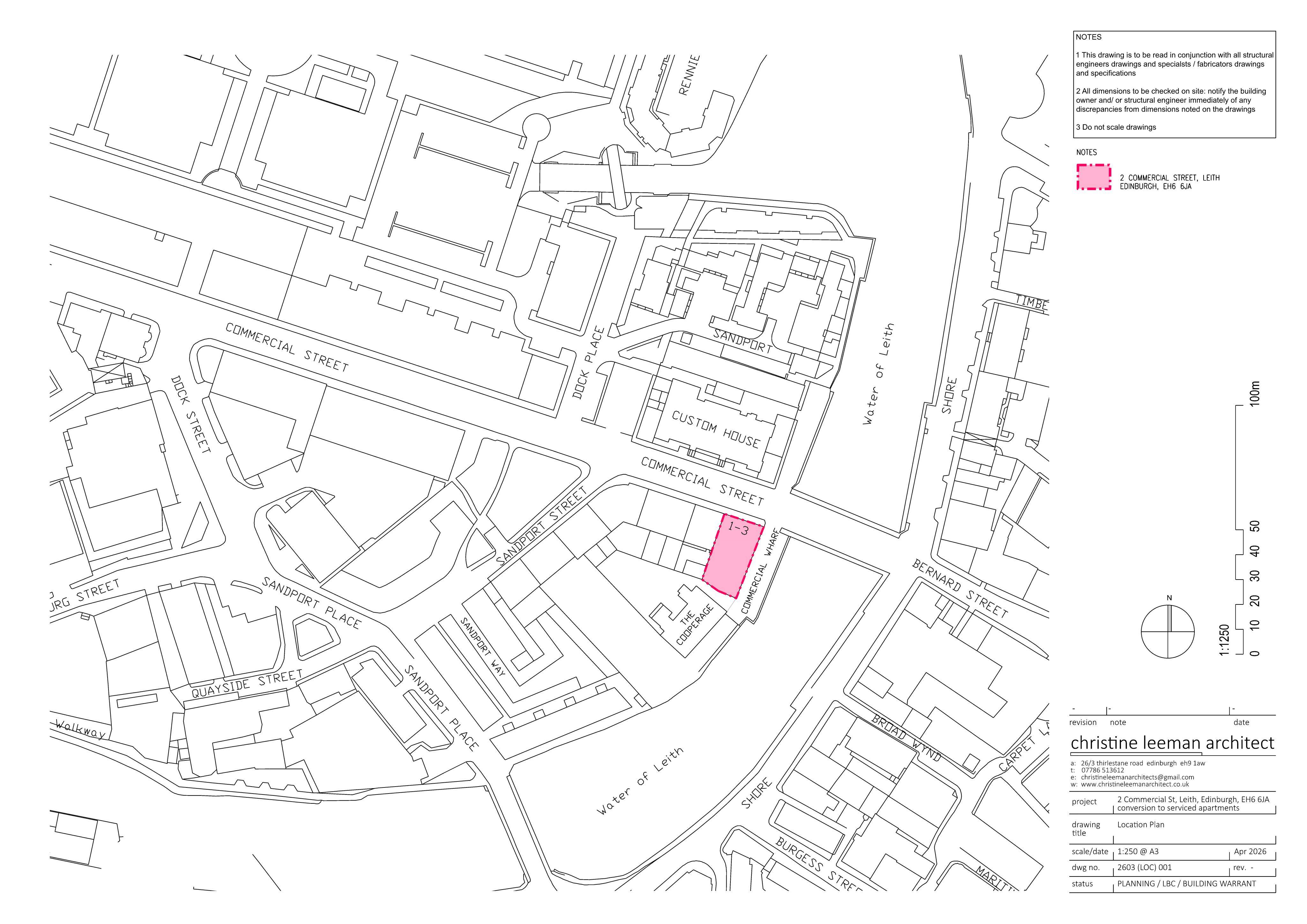
The proposal concerns 1F30, 2 Commercial Street, Edinburgh EH6 6JA, a property close to The Shore and within the Leith Conservation Area. The application is for internal alterations and a change of use from office space to serviced short-term-let apartments.
The case is worth watching because it combines several live local planning issues in one small site: the future of office space in Leith, the continuing demand for visitor accommodation, and the extra scrutiny that applies when works affect a listed building.
What is proposed
The application seeks consent for internal alterations linked to a change from office use to serviced short-term-let apartments.
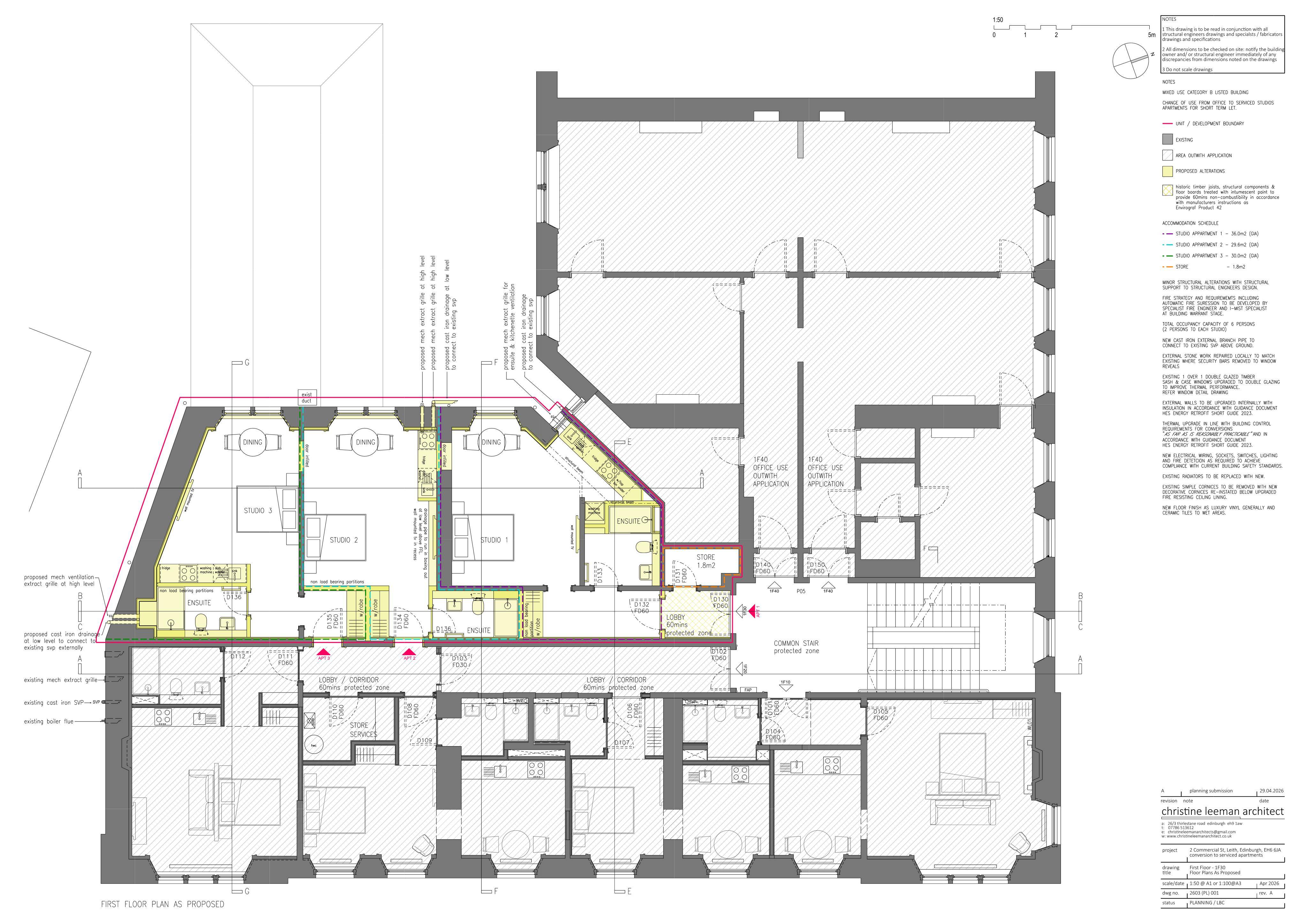
In practical terms, the office accommodation would be reworked to create three serviced short-let studios. The emphasis of the proposal is on internal changes, with only limited external alterations identified in the application summary.
The site is not being presented as a major redevelopment or new-build scheme. Instead, it is a conversion of existing accommodation within a historic urban setting.
Key points are:
- Site: 1F30, 2 Commercial Street, Leith
- Current use: office space
- Proposed use: serviced short-term-let studios
- Works: mainly internal alterations
- Heritage context: listed building consent application in the Leith Conservation Area
Where the site is
Commercial Street runs through a busy part of Leith, close to The Shore and the waterfront. The surrounding area includes a mix of commercial premises, homes, hospitality businesses, visitor accommodation and cultural destinations.
That mix is part of what makes the application locally notable. A change from office space to short-let accommodation may be modest in physical scale, but it sits within a wider conversation about how central Leith balances employment space, housing pressures, tourism, evening economy uses and heritage protection.
The address falls within the Leith Conservation Area, a designation used for places of special architectural or historic interest. In conservation areas, changes to buildings and their setting can attract closer attention because of their potential impact on local character.
Why listed building consent matters
The planning reference for the case is a listed building consent application. Listed building consent is concerned with works that may affect the character of a listed building as a building of special architectural or historic interest.
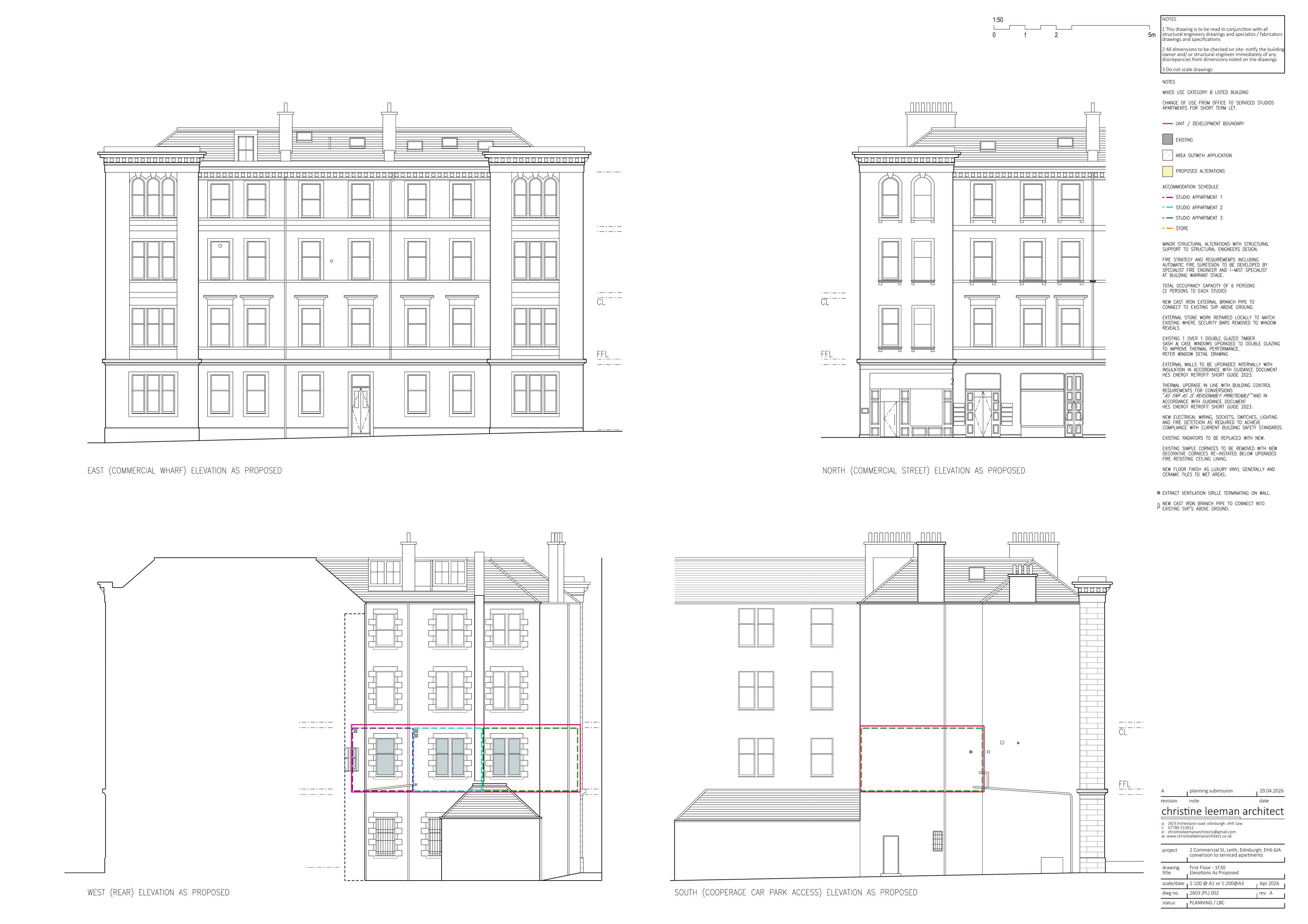
That does not mean change is ruled out. Many listed buildings are adapted over time, especially in urban areas where commercial buildings have to find viable modern uses. But the details of internal alterations can matter, particularly where historic fabric, layouts, stairs, doors, windows, decorative features or other character-defining elements may be involved.
For neighbours and local groups, the listed building aspect is important because the assessment is not only about the proposed use. It is also about how the works would be carried out and whether they would preserve the building’s special interest.
Why the short-let element will attract attention
Short-term-let accommodation remains a sensitive issue in Edinburgh, including in Leith. Residents, businesses and councillors often look closely at proposals that would create serviced accommodation because they can affect how buildings are used day to day.
In a street-facing commercial location, some may see visitor accommodation as compatible with the area’s hospitality and tourism economy. Others may focus on the loss of office space, the operation of short lets, or the cumulative effect of visitor accommodation in neighbourhoods where people also live and work.
This proposal is small in scale compared with hotel developments or large residential conversions, but its location means it may still draw interest from nearby occupiers and heritage observers.
What to look for in the application
Anyone reviewing the case should focus on the details that explain how the conversion would work inside the building and how the serviced studios would relate to neighbouring uses.
Useful points to check include:
- the proposed internal layout;
- how much existing historic fabric would be altered;
- whether any external changes are visible from the street or public spaces;
- access arrangements for guests and servicing;
- how the use would sit alongside other occupiers in the building;
- any heritage statement, plans or supporting drawings submitted with the application.
Because the proposal is for listed building consent, the drawings and heritage information are likely to be central to understanding the impact of the works.
What happens next
The application was received and validated by City of Edinburgh Council on 30 April 2026 and is currently marked as Awaiting Assessment.
Public comments are open, with the council’s weekly list giving a comment deadline of 5 June 2026. Comments can normally be made through the council’s planning portal using the application reference.
The application reference is 26/01848/LBC. The address to search is 1F30, 2 Commercial Street, Edinburgh EH6 6JA.
About the author
Building City Scope — tools to make Edinburgh's planning data easier to search, understand and use.