View the full application record
Open the live City Scope application page for documents, council links, tags, insights and status updates for reference 26/02896/LBC.
A defibrillator cabinet could be fixed to existing railings beside the National Monument on Calton Hill, adding a small but highly visible public safety feature at one of Edinburgh’s best-known landmarks.
The proposal is for the installation of a defibrillator at 36 Calton Hill, the address associated with the National Monument. The site is a listed landmark, so even a modest addition such as an external cabinet requires listed building consent before it can go ahead.
What is proposed
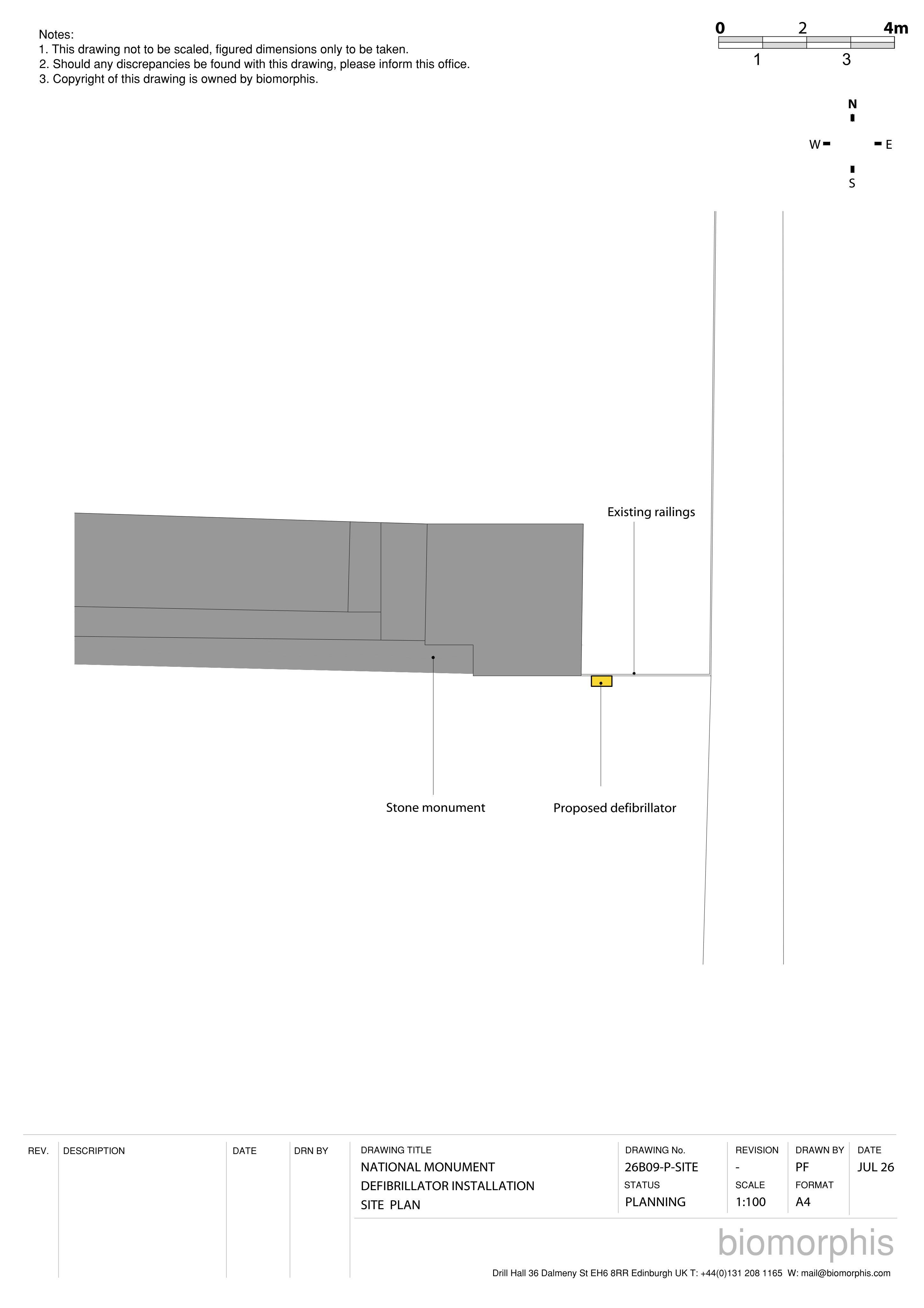
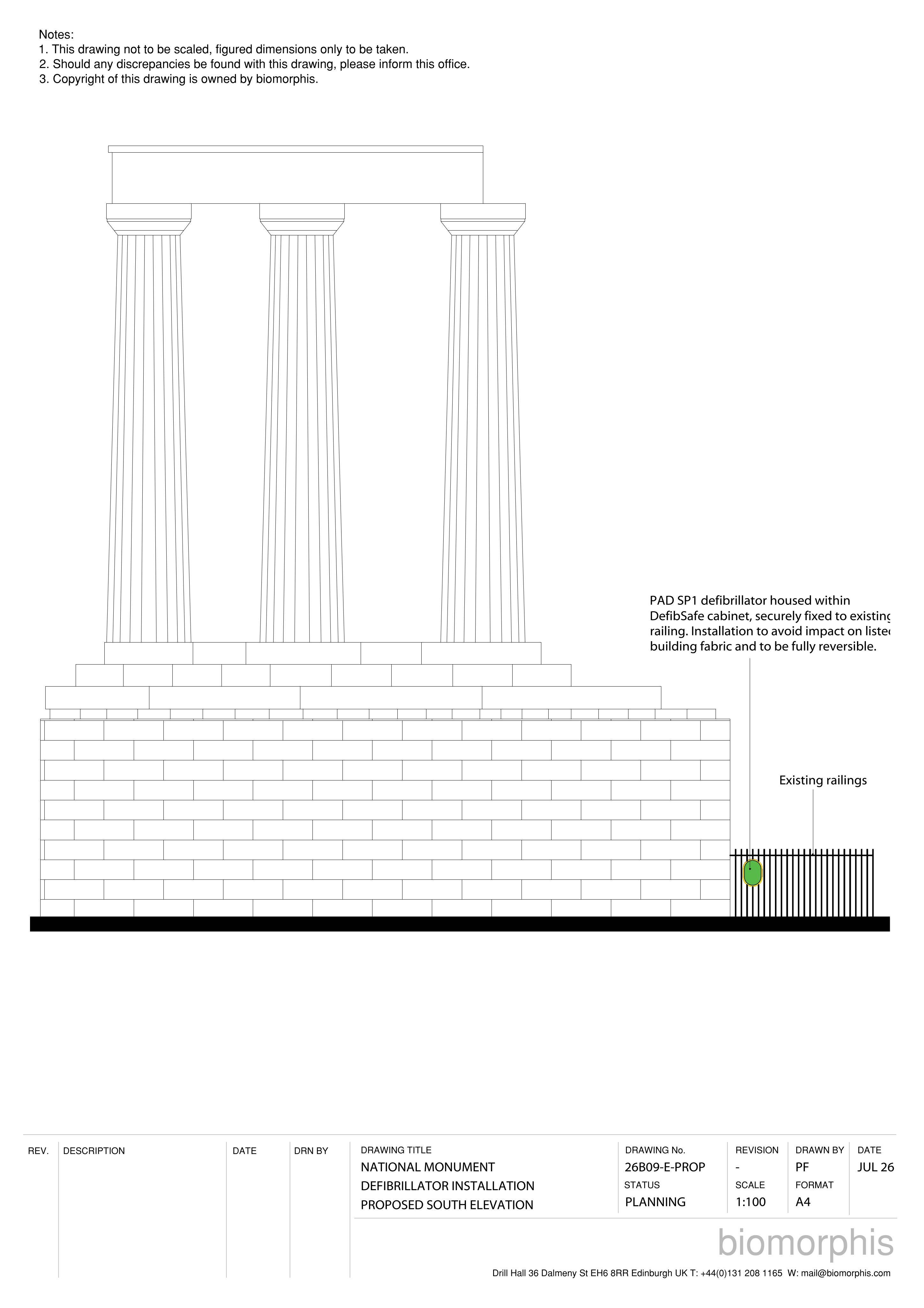
The application seeks consent for a defibrillator installation beside the National Monument. The planning summary indicates the cabinet would be attached to existing railings rather than requiring a larger standalone structure.
In practical terms, the change would be minor in physical scale: a cabinet for emergency medical equipment placed in the public realm. Its purpose would be to make a defibrillator available near a busy visitor location and civic landmark.
No wider works, building alterations, new structures, or landscape changes are described in the application summary.
The site: National Monument, Calton Hill
The National Monument is one of the most prominent structures on Calton Hill, overlooking central Edinburgh. It sits within a highly sensitive historic setting and is widely recognised as part of the city’s skyline.
The monument is a Category B listed building. That status means changes affecting its character or setting are assessed through the listed building consent process. In this case, the issue is not the scale of development, but how a modern safety cabinet would sit beside a historic structure and its railings.
Calton Hill is also part of Edinburgh’s wider historic townscape and is a major public destination for residents, tourists, photographers and event visitors. Small changes here can attract attention because of the site’s visibility and heritage value.
Why it matters
Public-access defibrillators are designed to be used in emergencies where someone may be in cardiac arrest. Their value depends heavily on location, visibility and accessibility.
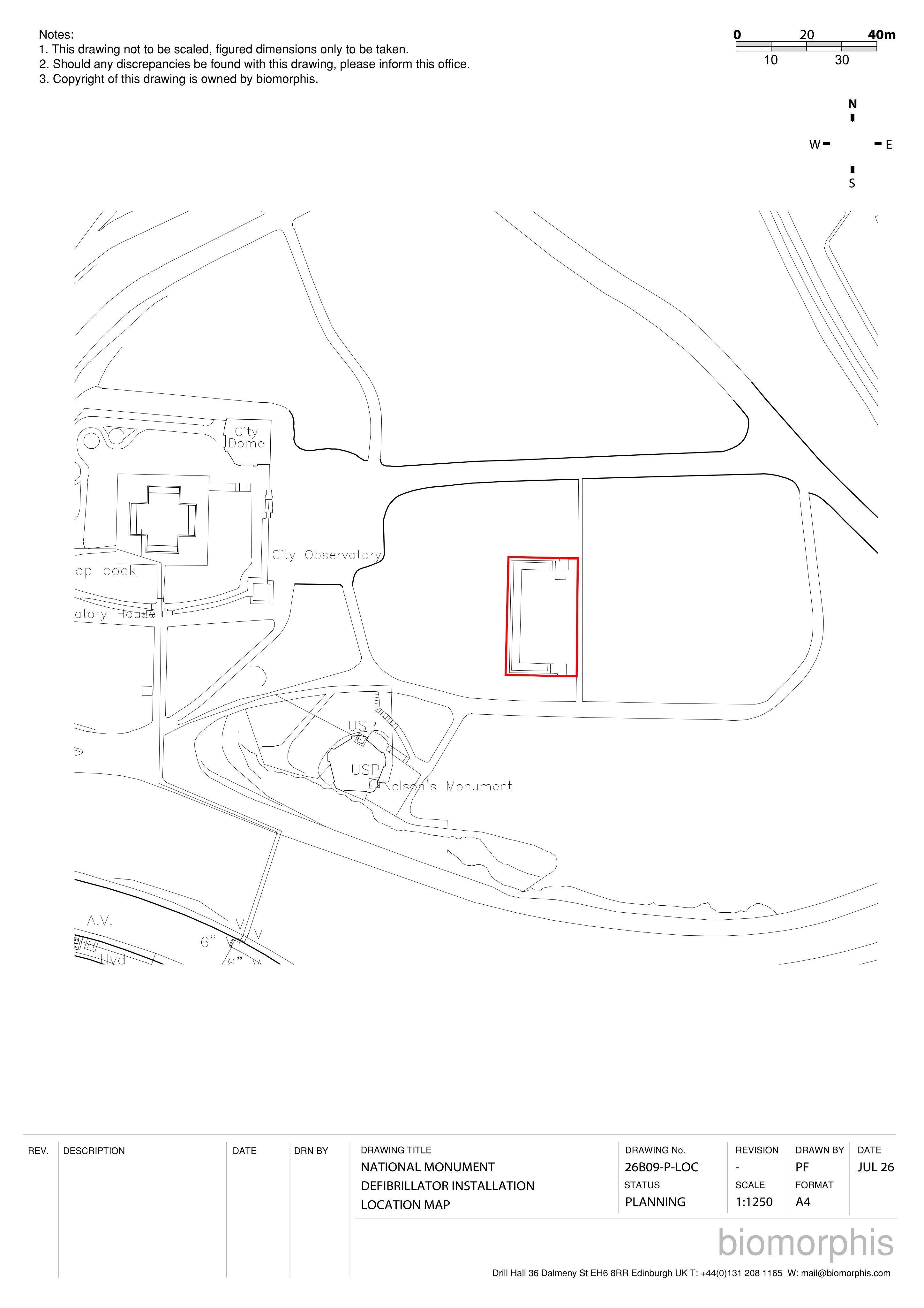
A cabinet near the National Monument would place emergency equipment at a location with regular footfall and open public access. Calton Hill is used throughout the day and evening by walkers, visitors and people attending events or viewpoints across the hill.
The planning interest is the balance between public safety and heritage impact. A defibrillator cabinet is a small intervention, but on a listed monument site the council will still need to consider its appearance, fixing method and relationship to the historic railings and setting.
For nearby residents, businesses, heritage groups and regular users of Calton Hill, the application is worth noting because it would introduce a new visible item of equipment at a landmark location.
What the council will consider
Because this is a listed building consent application, the key planning questions are likely to focus on the effect of the installation on the listed structure and its setting.
Relevant considerations may include:
- where exactly the cabinet would sit beside the monument;
- whether fixing it to existing railings would affect historic fabric;
- the cabinet’s appearance, colour and visibility;
- whether the public safety benefit can be delivered with minimal impact on the landmark.
The application is currently marked as awaiting assessment, and no decision has been issued.
How to find the application
Residents and interested parties can find the case on the City of Edinburgh Council planning portal by searching for the address or reference number.
- Address: National Monument, 36 Calton Hill, Edinburgh
- Proposal: Proposed defibrillator installation
- Planning reference: 26/02896/LBC
- Status: Awaiting Assessment
- Application type: Listed building consent
The council’s portal entry includes the application record and associated documents, where available.
About the author
Building City Scope — tools to make Edinburgh's planning data easier to search, understand and use.